
White sheets do not turn yellow because they are old. They turn yellow because of body oils, sweat, leftover detergent and fabric softener, hard water and the occasional coloured sock that slipped into the wash. The fix is not chlorine bleach every week, which actually weakens cotton and yellows polyester. The fix is a routine: wash often, wash warm, dose detergent correctly, skip softener, dry in the sun and give the sheets an oxygen boost once a month. This is the routine we use on white sheets that get washed every few days in the rooms we run, and it works just as well at home.
Why white sheets turn yellow or grey
- Body oils and sweat. Skin releases oil all night. It settles into the fibers, oxidises, and after a few weeks you see a yellow tint, strongest on pillowcases and the top edge of the duvet cover.
- Too much detergent. Extra detergent does not rinse out fully. It leaves a thin film that traps dirt and turns white fabric dull grey.
- Fabric softener. Softener coats the fibers with a waxy layer. The layer yellows with heat and makes cotton less absorbent and less breathable.
- Hard water. Minerals in the water deposit on the fabric and dull it over time.
- Washing with colours. Even light colours release a little dye. Whites should always be washed alone.
- Chlorine bleach used too often. It whitens for a day and damages fibers for good. On polyester and poly-cotton it causes a permanent yellow cast.
The weekly routine that keeps them white
- Wash every week. Oils that are washed out after seven days do not have time to set. Pillowcases can go twice a week if you use face creams or hair oil.
- Shake and pre-treat. Shake the sheets out, then rub a few drops of liquid detergent into the pillowcase edge and any visible marks. Leave it ten minutes.
- Whites only. Sheets, pillowcases and duvet cover in one load, nothing coloured, and do not overload the drum. Fabric needs room to move to come out clean.
- Warm, not hot. 40°C for cotton, 30°C for microfiber and poly-cotton. Hot water sets protein stains and is hard on polyester.
- Measure the detergent. Use the amount on the pack for a normal load, or a little less if your water is soft. More detergent does not mean cleaner.
- Skip the softener. Add half a cup of white vinegar to the rinse compartment instead. It removes detergent residue, softens the fabric and leaves no smell once dry.
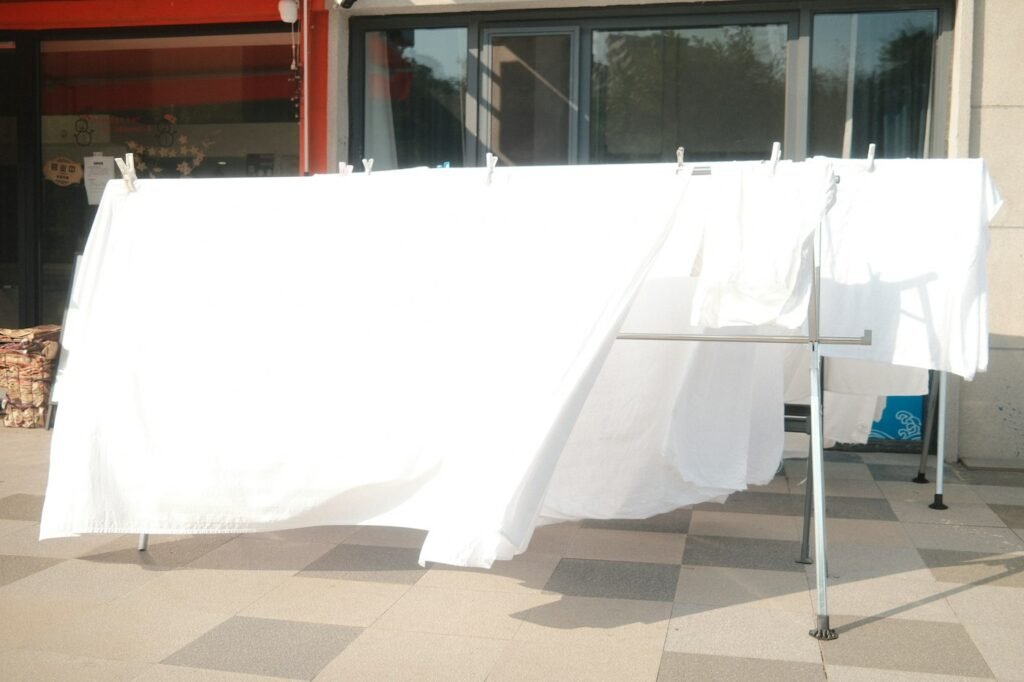
- Dry in the sun. Sunlight is a natural, gentle whitener and the Egyptian sun does the job in a couple of hours. Take the sheets in as soon as they are dry; leaving cotton in strong sun for days will weaken it.
- Fold warm, or iron slightly damp. Folding straight from the line removes most creases. If you iron, do it while the fabric is still a little damp for a smooth finish.
Already yellow? The rescue wash
If your sheets have already lost their brightness, one normal wash will not fix it. Do this instead, once, and then return to the weekly routine.

- Fill a basin or the bathtub with warm water and dissolve a scoop of oxygen-based whitener (sodium percarbonate, sold as “oxygen bleach” or colour-safe bleach) or half a cup of baking soda.
- Soak the sheets for four to six hours, or overnight for heavy yellowing. Turn them once or twice.
- Wash as usual at 40°C with your normal detergent and vinegar in the rinse.
- Dry in direct sun. For pillowcases with stubborn yellow, rub a little lemon juice into the mark before hanging them in the sun.
- Repeat the soak once more if needed. Two rounds restore most cotton sheets.
What to avoid
- Chlorine bleach as a routine. Keep it for emergencies on 100% cotton only, well diluted, and never on microfiber or poly-cotton.
- Water above 60°C. It is unnecessary and shortens the life of every fabric.
- A tumble dryer on high heat. If you must use one, choose low heat and take the sheets out slightly damp.
- Storing sheets while even slightly damp. That is how grey spots and musty smells begin.
- Fragranced softener “for whiteness”. It is still softener.
Cotton and microfiber: slightly different rules
Everything above works for both, with two adjustments. Egyptian cotton can take the warmer 40°C wash and benefits from the sun. Microfiber and poly-cotton prefer 30°C, dry in under an hour, and should never meet chlorine bleach. If you are not sure which fabric you own, or which to buy next, read our guide to Egyptian cotton vs microfiber vs poly-cotton.
Pillowcases and duvet covers: the parts that yellow first
The pillowcase takes the face, the hair and whatever cream you used that night, so it yellows long before the sheet does. Two easy fixes: wash pillowcases twice a week, or keep a spare pair so one is always clean. Our pillowcases and shams are sold separately for exactly this reason.

The duvet cover yellows along the top edge, where it touches the chin and neck. Fold the top of the flat sheet back over the duvet when you make the bed. The sheet takes the contact instead, and it is far easier to wash than the whole cover. A white duvet cover cared for this way stays white for years; you can see the full duvet cover collection here.
A second set makes everything easier
Most of the yellowing we see comes from one simple cause: a single set that goes back on the bed the same day it was washed, sometimes not fully dry. A second, inexpensive set, like our Essentials Set, gives your white cotton time to dry and air properly, and spreads the wear over two sets. It is the cheapest upgrade to a bedroom that always looks fresh.
Frequently asked questions
Occasionally, well diluted, on 100% cotton only. Used every week it weakens the fibers and shortens the life of the sheet. Never use it on microfiber or poly-cotton, where it causes a permanent yellow cast. An oxygen-based whitener is the safer choice.
Once a week. Pillowcases can be washed twice a week if you use face cream or hair products, because they take the most body oil and yellow first.
Usually too much detergent, fabric softener, or both. The residue leaves a film that traps dirt. Cut the detergent to the recommended dose, drop the softener, and run one wash with half a cup of white vinegar in the rinse.
It helps. Baking soda softens the water and lifts detergent residue, which brightens dull whites. For real yellowing, an oxygen-based whitener soak followed by drying in the sun works better.

Written by Sammar
Sammar writes about care, washing and setting up a new home for Mony’s Home. Her routines come from sheets that are washed every few days in rooms we run.
[…] and a white duvet cover. White bedding is the easiest to keep looking fresh (see our guide on keeping white sheets white) and it is the canvas for everything else. Fold the top of the flat sheet back over the duvet in a […]
[…] you have chosen the fabric, these guides pick up where this one ends: how to keep white sheets white, how to style a calm bedroom in white, grey and cream, and, if you are furnishing a new home, the […]